Is Solar Worth It in NSW 2026? Complete ROI Analysis for Australian Homeowners
As electricity bills across New South Wales continue their upward trajectory in 2026, homeowners are increasingly asking one critical question: "Is solar worth it in 2026?"
Skepticism is natural. With changing feed-in tariffs and reduced federal rebates, some worry the golden age of solar has passed. However, the data tells a very different story. At Kratos Energy, we believe in transparent, numbers-driven analysis. In this comprehensive guide, we'll break down the real solar panel ROP Australia homeowners can expect, examining installation costs, rising electricity costs NSW residents face, and actual customer results to give you a definitive answer.
The Short Answer: Yes, Solar Is Worth It in 2026
Let’s cut to the chase. For 95% of NSW homeowners with suitable roof space, the answer is a resounding yes. The combination of high grid electricity pricing (averaging over 30c/kWh) and stabilized equipment costs has actually improved the value proposition of solar investment return.
Unlike the early days where high feed-in tariffs drove adoption, today's value comes from self-consumption offsetting expensive grid power with your own free energy.
Breaking Down the Numbers: Solar ROI in NSW
To understand solar worth it NSW calculations, we need to look at the financials of a typical installation. Let's analyze a standard 6.6kW system, the most common size for Australian homes.
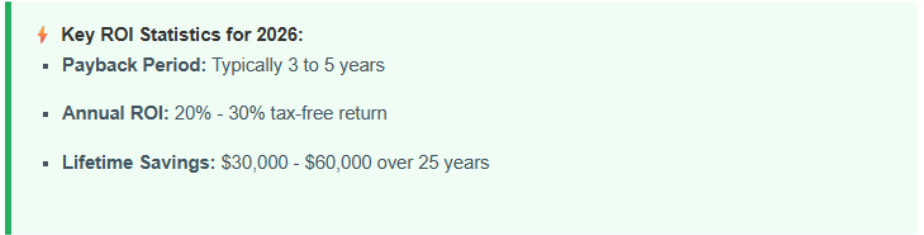
Average System Cost: A high-quality 6.6kW system from Kratos Energy costs $5,990 and $8,500 after federal rebates
Annual Savings: Based on typical usage, this system saves a household between $1,200 and $2,500 per years.
ROI Percentage: This translates to an annual return on investment of roughly 25% - far outperforming stocks, term deposits, or property rental yields.
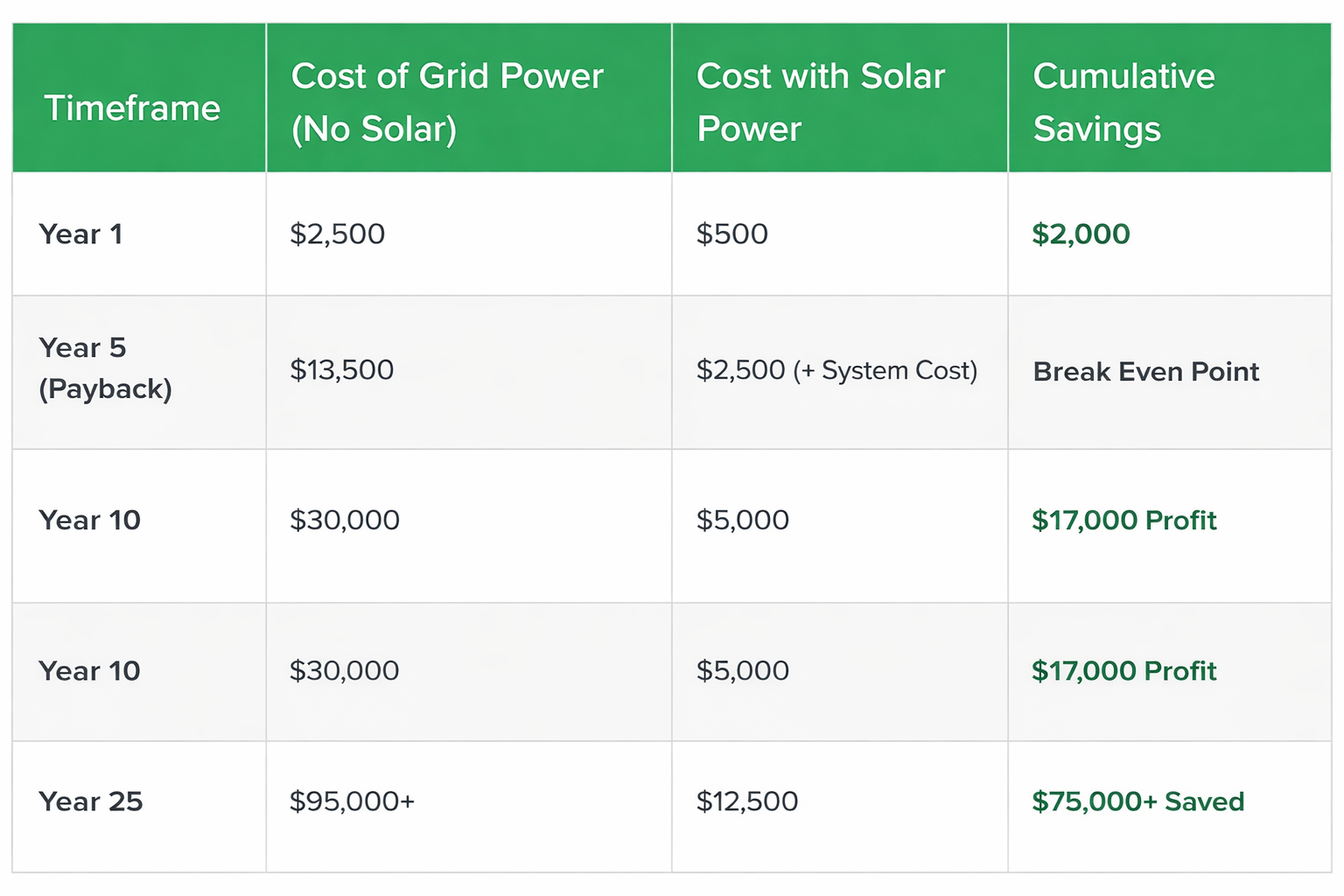
*Projections assume 3% annual electricity price inflation and conservative self consumtion rates.
Why 2026 Is a Critical Year for Solar Investment
Several converging factors make 2026 a unique window of opportunity for
Record High Electricity Rates: With grid prices stabilizing at historic highs, every kWh you generate is worth more than ever before.
Declining Rebates: The federal STC rebate (which saves you ~$3,000 upfront) reduces every January 1st until it phases out in 2030. Installing before December 31, 2026, locks in the current higher subsidy tier.
Mature Technology: Panel efficiency is at an all-time high. Our Sun Earth panels generate more power per square meter than models from just three years ago.
Energy Security: Predictions of grid instability for 2027-2030 make solar energy independence a strategic necessity, not just a financial one.
Real Savings: What NSW Homeowners Actually Experience
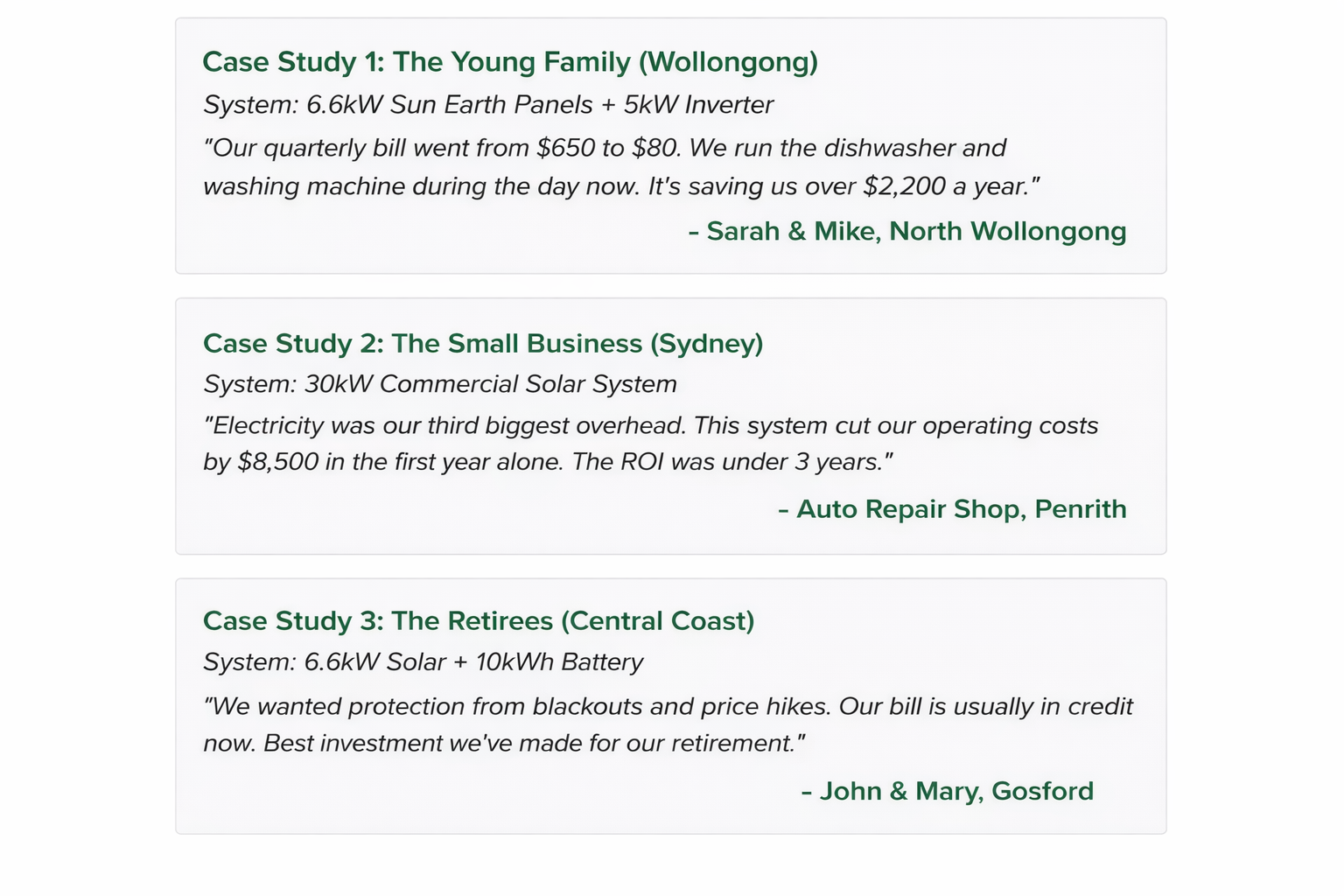
Theoretical numbers are useful, but real-world results matter more. Here are three examples from recent Kratos Energy installations across NSW:
Factors That Affect Your Solar ROI
While solar financial benefits are clear, your specific solar payback period Australia will depend on several variables:
Consumption Patterns: The "golden rule" of modern solar is self-consumption. Using power when the sun shines (or storing it) is worth 30c+/kWh, while exporting it to the grid (feed-in tariff) might only earn 5- 8c/kWh.
System Quality: Budget panels degrade faster. We use Sun Earth panels because their 25-year performance warranty ensures your ROI holds up decades into the future.
Roof Orientation: North-facing roofs generate the most peak power, but West-facing roofs produce power in the afternoon when households often use it most, potentially improving ROI.
Shading: Even partial shading can impact string inverter systems. In these cases, microinverters or optimizers can recover up to 20% more yield.
Solar + Battery: The Game Changer for 2026
Is a battery worth it? In 2026, the answer is increasingly "yes." The gap between buying power (30c) and selling it (6c) is so wide that storing your excess energy is now financially viable.
Adding the best solar battery for home NSW allows you to:
Use free solar power at night (when peak rates apply)
Maintain power during blackouts
Join Virtual Power Plants (VPP) to earn extra income
While a battery extends the payback period to 7-10 years, it maximizes solar energy independence and future-proofs your home against further rate hikes.